
Kinderdijk Windmills
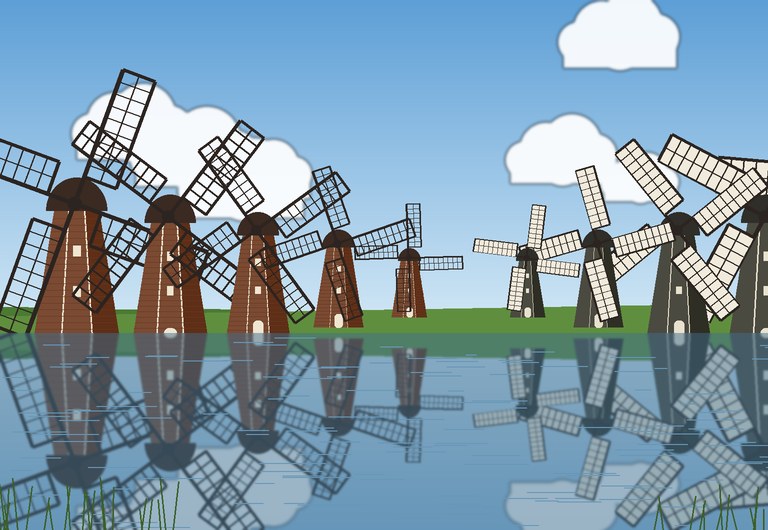
Kinderdijk, in the province of South Holland, is home to the largest group of old windmills in the Netherlands. Nineteen mills stand along the reed-lined canals where the Lek and Noord rivers meet, and together they tell the story of how the Dutch learned to live below sea level. The site was inscribed on the UNESCO World Heritage List in 1997.
Why the mills were built
The low-lying Alblasserwaard polder constantly filled with water from rain and seepage. In the 18th century the local water boards decided to build a system of mills that could lift that water step by step: first from the polder into collecting basins, and then, when the river level allowed, out into the river. Eight brick mills of the Nederwaard were built in 1738, and eight wooden thatched mills of the Overwaard followed in 1740. Further mills stand nearby in Nieuw-Lekkerland and Alblasserdam.
How a drainage mill works
The sails turn a horizontal wind shaft in the cap, which drives a vertical shaft down through the body of the mill. At the bottom, a large scoop wheel lifts water a short distance, from the lower canal into the higher basin. The miller turns the whole cap so the sails face the wind, and adjusts the canvas on the sail lattices to match the wind strength.
After the Second World War the work was taken over by pumping stations, but the mills were kept in working order. Some are still lived in by millers today, and one or two are open to visitors as museum mills showing what daily life inside a mill was like.
Visiting tips
- Walk or cycle the path between the two rows of mills. The full loop takes around an hour on foot.
- A boat tour along the canals gives a different, low view of the mills.
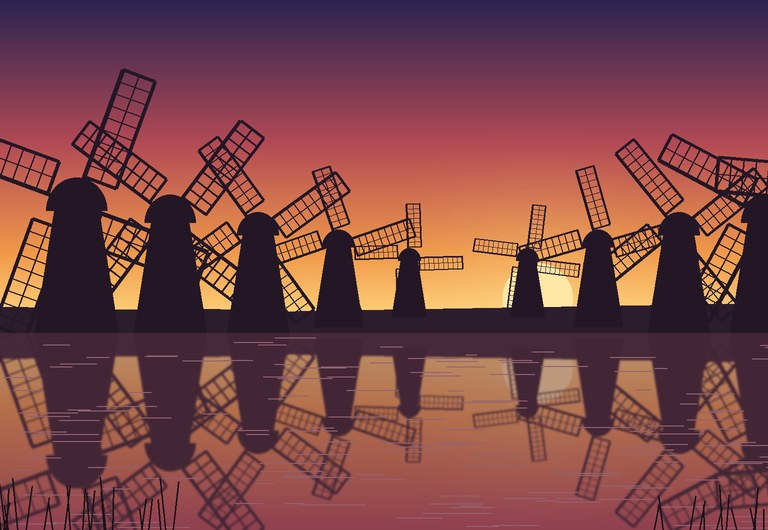
- Arrive early or stay until the evening to avoid the busiest hours.
- Look out for National Mill Day on the second weekend of May, when many Dutch mills open their doors.
Key facts
| Location | Kinderdijk, South Holland, Netherlands |
| Number of mills | 19 |
| Built | 1738 (Nederwaard), 1740 (Overwaard) |
| Purpose | Draining the Alblasserwaard polder |
| UNESCO World Heritage | Since 1997 |
Best time to visit
Spring and early autumn bring mild weather and softer light on the canals. National Mill Day falls on the second weekend of May.
Your rating
Tap a star to rate this place. Ratings are saved only on this device.